
| Home | Our Hope | |
| Bible Study |
|
October 2, 2016 |
| Fall Feasts 2 | ||
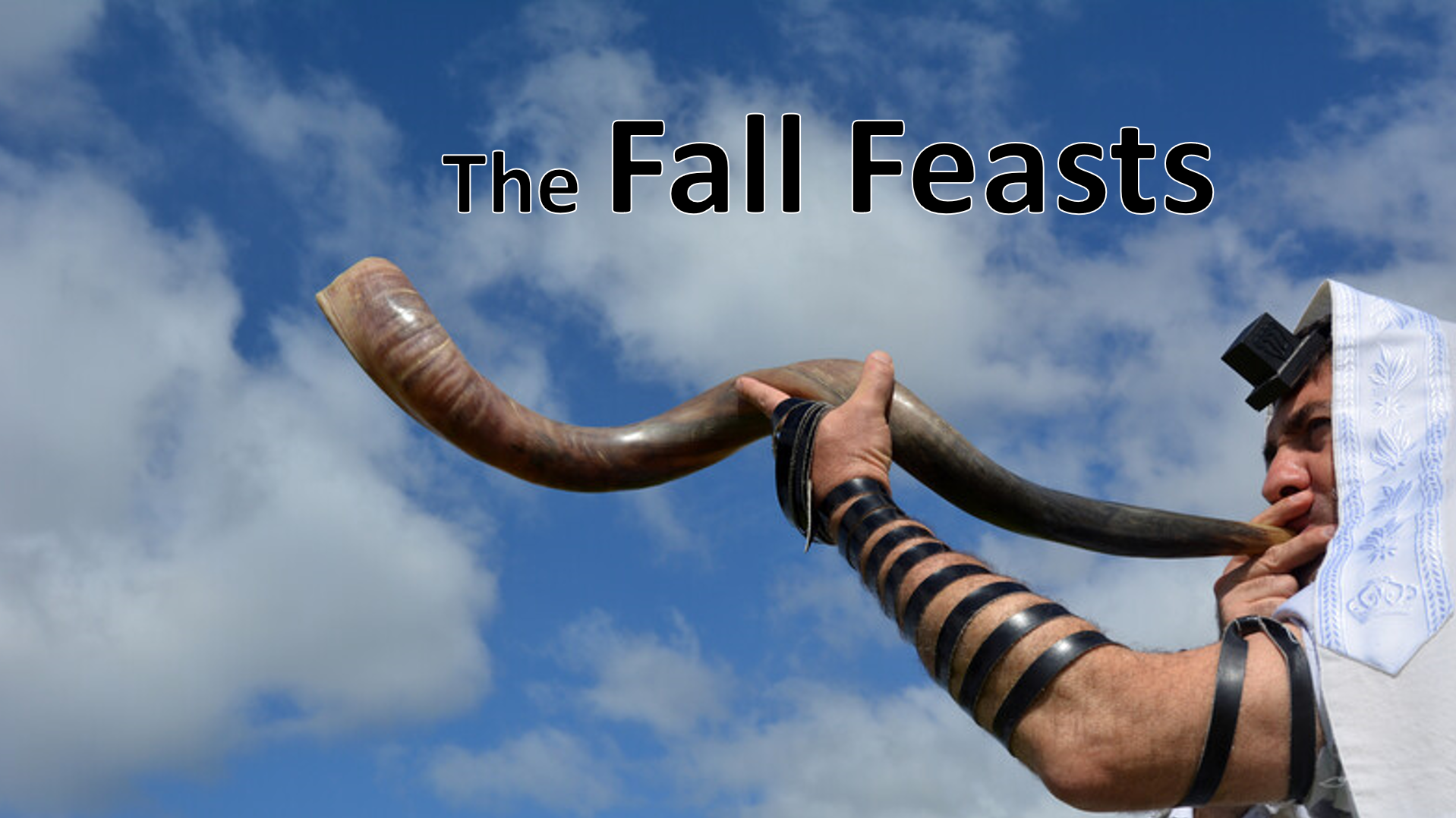
God set aside seven times in every year as feasts for Israel. Israelites were required to make every possible effort to be in Jerusalem for the days of those feasts. Four of these feasts come in the spring of the year and are called the Spring Feasts. The other three come in the fall and are called the Fall Feasts. The Bible repeatedly refers to these days as Holy days, set aside for God's purposes. In Ezekiel 22:26, God refers to them as his appointed days, days he has set aside for himself.
We now understand that God's appointed days marked the day of the year when God would accomplish major steps in his plan of salvation and restoration. The Spring Feasts marked the major events of the first coming of the Messiah, his sinlessness, his death, the time he would spend in the grave, his resurrection, and the giving of the Holy Spirit. All of these happened on the exact day of the feast that is associated with them.
Because the spring feasts mark the major points of Jesus' first coming, we expect the fall feasts to mark the major events of his second coming. Because the events of the Spring Feasts occurred on the exact day of the feast, we expect that will be true of the Fall Feasts, though the Bible doesn't say it must be.
Today at sunset is the beginning of the Feast of Yom Teru'ah - which means the day of sounding. It is the first of the major feasts of fall. Like the other feast days, it is also prophetic. These feast days were not just days of rest and a time to socialize and have fun; they were also prophecies of things to come.
In this lesson, we will learn what God is teaching us from the Fall Feast days.
We'll begin with a quick review of the spring feasts.
| Feast Days | When | Symbolizing |
| - preparation - all yeast is removed from the home (Exodus 12:15,19) | Previous month | Removing sin |
| - selecting the lamb (Exodus 12:3,5) | Nissan 10, 4 days before Passover | Choosing a flawless lamb |
| Passover | Nissan 14, any day of the week | Sacrifice of the Lamb for sin |
| Days of Unleavened Bread | 3 day period beginning at Passover | A sinless sacrifice in the grave |
| First Fruits | Nissan 17, 3 days after Passover | Resurrection from the grave |
| Shavu'ot | Sivan 6, 7 weeks plus a day (50 days) after the day after Passover | The giving of the Holy Spirit |
After the Spring feast days, comes the summer. But this is not a time for lazing around in the sun.
"In Leviticus 23, God had just completed addressing the spring festivals; and before addressing the fall festivals, He had this to say, seemingly out of the blue:"
When you reap the harvest of your land, moreover, you shall not reap to the very corners of your field nor gather the gleaning of your harvest; you are to leave them for the needy and the alien. I am the LORD your God. (Leviticus 23:22)
"Why should God be addressing the providing of food for the needy and the alien at this point? The answer is this: The feasts all have sequential prophetic outworkings, and this admonition also has a prophetic outworking, and perfectly in sequence with the feasts."
"Pentecost has come [and gone], and we are now in the [time of the fullness of the Gentiles1], the summer, and it's the time for laboring in the fields. Jesus said, "Do you not say, 'There are yet four months, and then comes the harvest'? Behold, I say to you, lift up your eyes and look on the fields, that they are white for harvest'" (John 4:35). It's the time in which we all need to be laboring to provide spiritual food for the spiritually needy and the alien to bring in a harvest of souls for the Lord, each of us doing his or her part according to our gifts and callings."2
The fall feast days together make up a 15-day period. These are the most holy days on the calendar, and the most holy of all these days is Yom Kippur - the Day of Atonement.
Again the Lord spoke to Moses, saying, 24 "Speak to the sons of Israel, saying, 'In the seventh month on the first of the month you shall have a rest, a reminder by blowing of trumpets, a holy convocation. 25 You shall not do any laborious work, but you shall present an offering by fire to the Lord.'" (Leviticus 23:23-25)
The first day of any month on the Hebrew calendar is always a New Moon, when the moon is at its minimum, a thin sliver. As all days do on the Hebrew calendar, this day begins at sunset. The Jews believe this is the day the universe was created.
It was observed by Jews as the verses say, by blowing trumpets, by resting, and by a sacrifice, which had to be at the temple. Modern Jews, who do not have a temple, observe this day by blowing trumpets and by resting and praying. They have told themselves that prayer is just as good as the sacrifice God required. Modern Jews have attached many other activities to this feast day and the others. Christians, if they choose to, can blow trumpets or horns or anything else that they would use to celebrate the arrival of a king. They can also rest. There is no reason for Christians to do the non-Biblical activities that Jews have attached to these feasts.
The Feast of Trumpets is celebrated by shouting and the blowing of trumpets, both metal and ram's horn trumpets. At the start of each month the priests blow the trumpet to tell the people to warn the people to turn away from their sins. It is also a warning that the king is coming. At the start of this month, Yom Teru'ah, everyone blows their trumpets and horns. This is a welcome for the king.
Because this is the 7th month on the religious calendar, this is the 7th blowing of trumpets on the calendar. In the Book of Revelation and in many of the epistles, there are references to 7 trumpets, or just the 7th trumpet, or the final trumpet. This feast of Yom Teru'ah is the symbolic representation of that 7th trumpet. Especially from 1st and 2nd Thessalonians, we know that the final trumpet is the call to God's people to arise and to ascend to be with him in the event now called the Rapture. Here are the verses from 1 Thessalonians 4
16 Because Our Lord shall descend from Heaven with a command and with the voice of the Archangel and with the trumpet blast of God, and the dead who are in The Messiah shall rise first; 17 and then we who remain, who have life, we shall be carried away with them together in clouds to a meeting of Our Lord in the air, and in this way, we shall always be with Our Lord.
1 Corinthians 15 says it this way:
52 Suddenly, like the blink of an eye, at the last trumpet, when it shall sound, and the dead shall rise without corruption, and we shall be transformed.
This day was known to Israel as the day that no man knows. This is because the priests determined the exact day by observation of the moon. So no one knew the day until the priests said it was the day. Now we know the lunar cycles with great precision and can predict the day. The Bible has many references to Jesus returning on a day you do not know, and the theme of coming unexpectedly like a thief in the night is everywhere.
The Leviticus verse says this day is a reminder, but it doesn't say what we are to remember. The Jews have a prayer they pray on this day, which ties back to the voice of God that came as the sound of a Shofar at Mount Sinai, just before the Ten Commandments were given. All of this happened as God came to be with them in the wilderness.
You revealed Yourself in Your cloud of glory to Your
holy people to speak to them. From the heavens You let
them hear Your voice, and revealed Yourself to them in
pure clouds. The whole world also trembled before You,
the beings of creation were in awe of You, when You, our
King, revealed Yourself upon Mount Sinai to teach Your
people Torah and mitzvot. You let them hear the majesty
of Your voice and Your holy utterances from flames of fire;
with thunder and lightning You revealed Yourself to them,
with the sound of the shofar You appeared to them
The Feast of Trumpets begins a 10-day period called the Days of Awe. The generally accepted understanding of the meaning of these days is that this is a time of judgment and a last chance for each person to consider their sins and repent. At the end of this period, it will be too late.
This is the Jewish perspective on the meaning. "This is a time for serious introspection, a time to consider the sins of the previous year and repent before Yom Kippur. One of the ongoing themes of the Days of Awe is the concept that God has 'books' that he writes our names in, writing down who will live and who will die, who will have a good life and who will have a bad life […]. These books are written in on Rosh Hashanah, but our actions during the Days of Awe can alter God's decree."3
During these Days of Awe, God will be pouring out his wrath on the people on the earth (Revelation 16). As we saw in Yom Teru'ah, we will be with him in the clouds. What stands out most from Revelation 16 is seen in these verses. They know God is sending plague after plague on them. This is how they respond.
And the children of men were scorched with great heat, and they blasphemed the name of God who has authority over these plagues, and they did not repent to give him glory. (Revelation 16:9)
And they blasphemed the name of the God of Heaven due to their pains and due to their sores, and they did not repent of their works. (Revelation 16:11)
Then the Lord spoke to Moses, saying, 27 "On exactly the tenth day of this seventh month is the Day of Atonement; it shall be a holy convocation for you, and you shall humble yourselves and present an offering by fire to the Lord. 28 You shall not do any work on this very day, for it is a Day of Atonement, to make atonement on your behalf before the Lord your God." (Leviticus 23:26-28)
The words "Day of Atonement" in these verses are actually the words Yom Kippur, which is more exactly translated as the "Day [of] Covering." Obviously this refers to covering over sin, which is our word "atonement."
The Days of Awe end with Yom Kippur, also called the Last Great Day. At the end of this day in Israel, the final sacrifices were made, and sin was symbolically removed completely. All those who had not repented of their sins by that time were "cut-off."
If there is any person who does not humble himself on this very day, he shall be cut off from his people. 30 As for any person who does any work on this very day, that person I will eliminate from among his people. 31 You shall not do any work. It is to be a permanent statute throughout your generations in all your dwelling places. 32 It is to be a Sabbath of complete rest for you, and you shall humble yourselves; on the ninth of the month at evening, from evening until evening, you shall keep your Sabbath." (Leviticus 23:29-32)
The Jews observed this day as the scripture said by resting completely. In other places, the scripture says that even eating was too much work. Modern Jews observe it this way also, and Christians can as well if they choose.
We see from those in Israel who were to be cut-off that this is also a day of judgment. The believers will be separated from the unbelievers permanently. No longer will salvation by faith be possible. For when the hope is seen, faith is no more.
[…] but hope that is seen is not hope, for if we see hope, why do we look for it? 25. But if we hope for what is not seen, we wait patiently for it. (Romans 8:24-25)
Now faith is the conviction concerning those things that are in hope, as if it were these things in action, and the revelation of those things that are unseen; (Hebrews 11:1)
In the year when the prophetic Fall Feasts are fulfilled, by this day, the glory of the Messiah will have filled the earth for 10 days. His wrath will also have been poured out on the people who remain. Yet during those 10 days, there has been a last chance at salvation. By his grace, God will have allowed salvation by faith to remain despite the hope being present, though somewhat distant (in the air).
At the end of those days, on that future Yom Kippur, that solemn day, the judgement will fall. Billions will be cut-off from God.
This feast day is actually a fast day. This is such a solemn day that even if it falls on a weekly Sabbath, which is a feast day of a different kind, the Sabbath becomes a fast day.
In Israel, this feast day involved a complicated set of sacrifices by the priests that show the final disposal of sin. Although Jesus' sacrifice has taken sin away from us, the record of sin still exists. This feast symbolizes the removal of sin, the day that Jesus' atoning sacrifice wipes the record clean.
This may be hard for some to understand. In a previous lesson, we learned that we are justified before God because Jesus paid the debt we owed. This is in the same way as a legal court where a man is freed or redeemed because his debt has been paid. But the court record still exists. This feast points to a day when even the court records will be destroyed.
This is two feasts at the same time.
Again the Lord spoke to Moses, saying, 34 "Speak to the sons of Israel, saying, 'On the fifteenth of this seventh month is the Feast of Booths for seven days to the Lord. 35 On the first day is a holy convocation; you shall not do any laborious work. 36 For seven days you shall present an offering by fire to the Lord. On the eighth day you shall have a holy convocation and present an offering by fire to the Lord; it is an assembly. You shall not do any laborious work.'" (Leviticus 23:33-36)
The Feast of Tabernacles begins 5 days after the Day of Atonement and lasts for 8 days. It marks the period of time when God was with his people, the Israelites, while they wandered in the desert. It symbolizes the coming time when God will again be with his people. It is also associated with temporary dwellings where God kept his people before they were to come into their promise.
In other verses, the Bible says they are to live in "Sukkot", little structures. The Hebrew word "Sukkot" is translated here as the word "booths." A Sukkah (singular of the plural Sukkot) is a simple, tent-like structure. For the 40 years the Israelites wandered in the wilderness, these were the dwellings they lived in, and took down and set up as they moved about. A Sukkah is essentially a tent, and is also associated with the word "tabernacle."
The Jews observed this as the scripture said. Most modern Jews do the same by building little huts in their back yards or on their roofs, where they live during this time. If they choose to, Christians can do the same. Many of them go out to parks or similar places where they can set up tents or huts.
Sukkot also talks about these temporary bodies that we live in as we travel through this wilderness. It speaks about the new bodies we will live in on that future Feast of Sukkot.
Revelation talks about this time.
And I heard a great voice from Heaven that said, "Behold, the Tabernacle of God is with the children of men, and he dwells with them and they shall be his people and the same God is with them and shall be their God." (Revelation 21:3)
On exactly the fifteenth day of the seventh month, when you have gathered in the crops of the land, you shall celebrate the feast of the Lord for seven days, with a rest on the first day and a rest on the eighth day. 40 Now on the first day you shall take for yourselves the foliage of beautiful trees, palm branches and branches of trees with thick branches and willows of the brook, and you shall rejoice before the Lord your God for seven days. 41 So you shall celebrate it as a feast to the Lord for seven days in the year. It shall be a permanent statute throughout your generations; you shall celebrate it in the seventh month. (Leviticus 23:39-41)
You shall live in booths for seven days; all the native-born in Israel shall live in booths, 43 so that your generations may know that I had the sons of Israel live in booths when I brought them out from the land of Egypt. I am the Lord your God. (Leviticus 23:42-43)
God doesn't give this feast a name, as he did with other ones. So people use the word "gathered" from the verse as the basis for naming this Feast.
God is being very repetitious, likely to emphasize that He wants his people to continue to do this. Remember that it isn't possible for us to do that in our time.
The verse says all the native-born in Israel shall live in booths. This doesn't occur anywhere else in scripture. It is plainly a limitation on who should keep this feast. The word "native-born" probably means two things.
So the people who are born in the land and born genetically from Israel are to live in booths. This feast activity is not meant for most Christians because most Christians are not in the lineage of Israel, and weren't born in the land of Israel.
Here's where God describes the purpose of this feast. This will help them remember that I had Israel live in booths for those 40 years when they went through the desert.
There is a prophetic meaning to this feast though. It speaks of the time when God's people will be gathered to him after he has returned and been made king of the earth. Other verses, including New Testament verses, talk about this great feast. It is sometimes called the Marriage Supper of the Lamb
The direct relationship between man and God was ruptured in the Garden of Eden, and sin entered the world. These feasts are the 7 steps that God has taken and will take to restore that relationship and remove sin.
When God gave these feasts to the Israelites, he never told them that there was a prophetic message in them. There is no evidence that any Jewish scholar prior to Jesus' time understood that the Spring Feasts were about the First Coming of the Messiah. At least in our time, there is some understanding that the Fall Feasts symbolize the coming of God as king over the earth, what we call the Second Coming of the Messiah. It wasn't until the Holy Spirit was given that any man understood that there was a message in the feasts and what the message was.
That is amazing when you think about it. Some people claim that the Old Testament was written by ordinary men and is not by the inspiration of the Holy Spirit. If that's the case, how could men write words that were prophecies, but they didn't know it?
1 Spoken of by Paul in Romans 11
2 http://www.biblestudyproject.org/feasts-of-israel-messianic.htm